Download File:
Every organisation has a history, even if it is moving quickly. Past decisions, leadership styles, major changes, successes, failures, internal conflicts, and previous transformation attempts all shape how people respond to what is happening today.
Sometimes leaders introduce a new direction without realising that employees are interpreting it through the lens of past experiences. If previous initiatives failed, people may become sceptical. If communication was poor in the past, employees may be slow to trust new announcements. If earlier changes created pain, people may prepare themselves for disappointment even before the current change begins.
This organisational memory can influence culture, behaviour, decision-making, and resistance. It can either support momentum or quietly slow progress. Leaders who ignore the past may find themselves surprised by reactions that seem irrational on the surface but make sense when viewed through the organisation’s history.
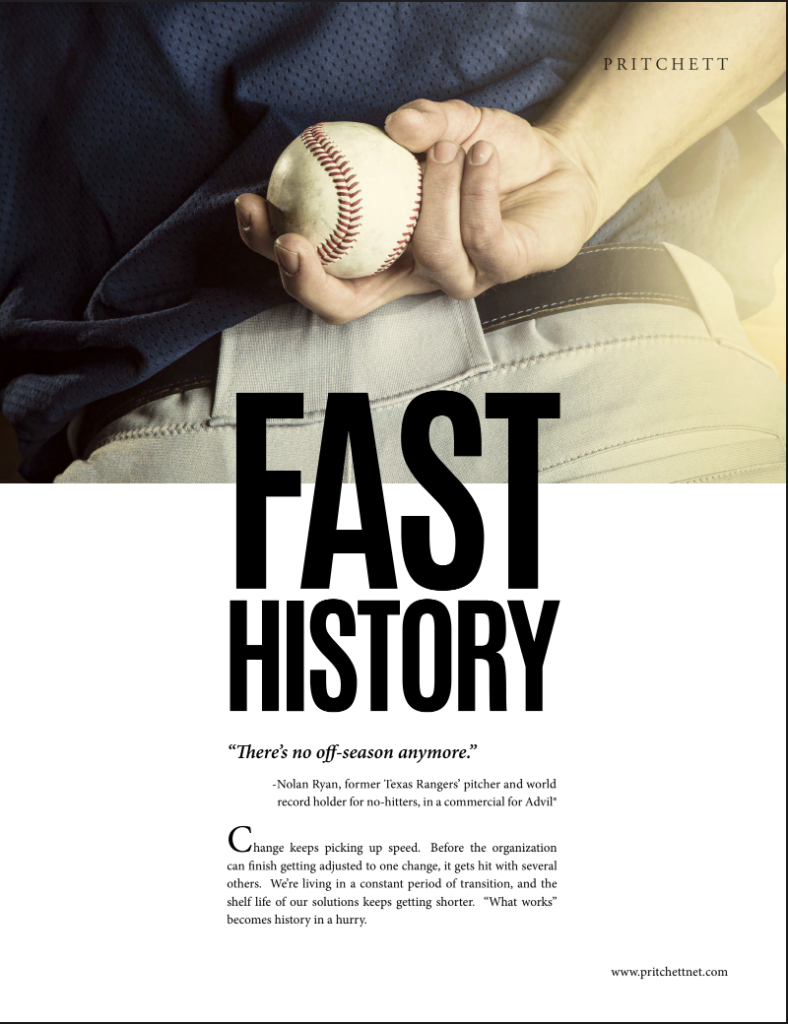
This Pritchett insight helps leaders understand how the past can move quickly into the present. It encourages a more thoughtful view of organisational behaviour, especially during transformation, restructuring, growth, or leadership transition.
This resource is useful for CEOs, senior leaders, HR professionals, culture teams, and change managers who want to better understand the emotional and historical context behind employee behaviour.
What You’ll Learn From This PDF:
The past often moves into the present faster than leaders realise.
Download this insight to understand how organisational history, previous change efforts, and employee memory can shape today’s behaviour, resistance, and readiness for transformation.