
Innovation Execution & Process Innovation Consulting

What Is Innovation Execution?
Innovation execution is the process of turning an organisation’s innovation strategy, approved ideas or transformation priorities into practical implementation and measurable business outcomes.
It bridges the gap between having a good idea and making that idea work within the organisation. This can involve redesigning processes, changing ways of working, testing new products or capabilities, aligning people, implementing technology and creating the operating discipline required to sustain the innovation.
Breakthrough Growth Through 16X Innovation
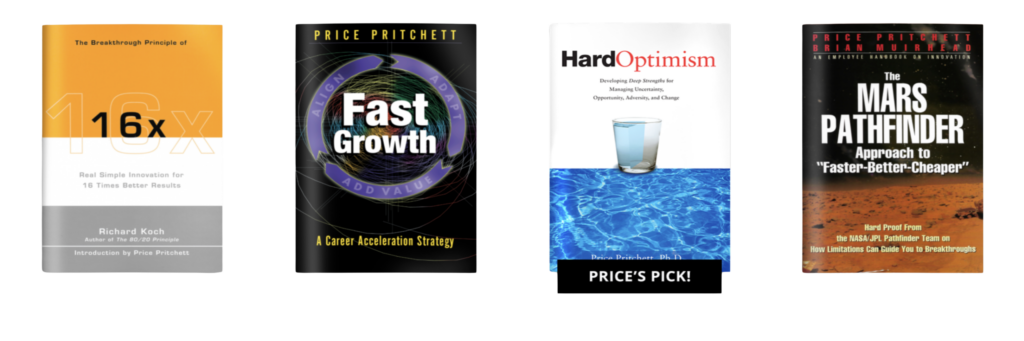
Breakthrough growth does not happen by doing more of the same. It happens when leaders challenge old assumptions, move faster, and create the discipline to turn bold ideas into 16X results.
At Pritchett Asia Pacific, we help organisations pursue 16X Innovation through breakthrough thinking, rapid experimentation, and action-focused execution. Innovation is not just about products. It is about rethinking processes, accelerating decisions, simplifying the way work gets done, and unlocking greater performance through people innovation. It is about creating the clarity, speed, and execution discipline to act decisively, adapt quickly, and seize breakthrough opportunities before others do.
Whether you are entering a new market, launching a strategic initiative, building future-ready capabilities, or preparing for your next growth leap, we help your organisation think bigger, move faster, and deliver breakthrough performance.
Why Innovation Fails Between Strategy and Execution
Many organisations want growth. Fewer are prepared for what growth demands.
Growth can require new behaviours, new capabilities, new decision-making patterns, new levels of speed, and a higher tolerance for uncertainty. Innovation can require teams to challenge familiar ways of working and experiment before every answer is clear.
Without structure, growth and innovation efforts may remain as ideas, workshops, brainstorming sessions, or strategic statements. Leaders may talk about breakthrough performance but continue operating with old assumptions, slow decision-making, and risk-avoidant behaviours.
To create meaningful growth, organisations need more than creativity. They need focus, discipline, experimentation, leadership alignment, and the willingness to act differently.
From 16X Thinking to Innovation Execution
Breakthrough thinking creates possibilities, but innovation delivers value only when those possibilities are translated into action. Pritchett’s 16X approach helps organisations challenge limiting assumptions while building the speed, focus and execution discipline required to implement meaningful innovation.
The goal is not simply to generate more ideas. It is to help teams act differently, test intelligently and execute the innovations that can create disproportionate business impact.
Our Approach to Innovation Execution
Breakthrough Thinking
Growth often begins by challenging the assumptions that keep the organisation operating within familiar limits. We help leaders and teams examine beliefs, constraints, habits, and decision patterns that may be limiting growth.
Execution Priorities
Not every opportunity deserves the same attention. We help organisations clarify where growth should come from, what opportunities align with strategy, and where teams should focus their energy.
Rapid Experimentation
Innovation requires disciplined experimentation. We help teams test ideas, gather feedback, learn quickly, and refine direction without waiting for perfect certainty.
Innovation Implementation
Turn approved innovation ideas into measurable business outcomes through clear priorities, rapid experimentation, strong ownership and effective implementation across products, processes and people.
Leadership & People Alignment
Breakthrough growth requires leaders who can model courage, focus, agility, and accountability. We support leaders in strengthening the behaviours needed to guide teams through uncertainty and opportunity.
Scaling What Works
Growth must be sustained beyond the first idea. We help organisations build rhythms, habits, and execution structures that support ongoing innovation and measurable momentum.
Three Areas of Innovation We Help Execute
Product Innovation Execution
Product innovation does not stop when an idea is approved. Organisations still need to move from concept to experimentation, implementation and adoption.
Pritchett helps teams strengthen the execution side of product innovation by creating clearer ownership, faster experimentation, stronger cross-functional collaboration and disciplined implementation. The focus is on helping the organisation move approved innovation priorities forward, not conducting market research or determining which products the organisation should pursue.
Process Innovation for Better Business Performance
Process innovation (or often also referred to as operational innovation) involves fundamentally rethinking how work is performed rather than simply making small improvements to the existing process.
Pritchett helps organisations redesign workflows, decision-making, roles and operating practices to improve speed, productivity and scalability. Where appropriate, this may include applying AI, automation, or digital tools to reduce repetitive work and allow employees to focus on higher-value activities.
People Innovation & New Ways of Working
Innovation is not limited to products and technology. Organisations can also rethink how work is structured, who performs it and which capabilities should remain internal.
With the emergence of agentic AI, people innovation may involve redesigning roles, introducing new capabilities, changing team structures, using external specialists or outsourcing selected activities where it improves speed, flexibility or performance.
Pritchett helps leaders manage the behavioural and organisational changes required to make these new ways of working effective.
Innovation Execution Challenges We Help Solve
We help organisations address growth and innovation challenges such as:
Who Our Innovation Execution Services Are For
This service is suitable for:
Meet Our Growth & Innovation Specialist



Frequently Asked Questions
Innovation execution is the process of turning an approved innovation strategy, idea or transformation priority into practical action and measurable business outcomes. It involves translating ideas into clear responsibilities, experiments, implementation plans and operating changes. Effective innovation execution helps organisations move beyond planning and ensure that new products, processes, technologies or ways of working are actually adopted and scaled.
Innovation strategy defines where an organisation wants to innovate, why it matters and which priorities should receive attention. Innovation execution focuses on turning those priorities into action. It includes experimentation, implementation, leadership alignment, process changes, employee adoption and performance measurement. In simple terms, strategy determines the direction, while execution makes the innovation work in practice.
Innovation implementation is the process of introducing and embedding a new idea, product, process, technology or way of working into an organisation. It typically involves planning, testing, stakeholder alignment, training, adoption and performance monitoring. Successful innovation implementation ensures that an idea moves beyond concept or pilot stage and becomes part of day-to-day operations.
Process innovation involves fundamentally improving or redesigning how work is performed to achieve better speed, productivity, quality, scalability or customer outcomes. It may include new workflows, automation, AI, digital tools, role redesign or different operating practices. Unlike minor process improvements, process innovation focuses on creating a meaningfully different and more effective way of working.
AI can support process innovation by automating repetitive tasks, improving decision-making, analysing large volumes of data and redesigning how work flows across teams. It can help organisations reduce manual effort, shorten turnaround times and allow employees to focus on higher-value activities. The strongest results usually come when AI is combined with process redesign rather than simply added to an inefficient existing workflow.
Operational innovation (also referred to as process innovation) is the introduction of fundamentally new ways to deliver work, manage resources or serve customers. It may involve redesigning processes, changing decision-making structures, applying new technology or creating different operating models. The goal is to improve how the organisation performs, often by increasing speed, flexibility, efficiency or scalability.
People innovation is about unlocking untapped human potential and harnessing the power of being human to create better business outcomes. It recognises our ability to feel, experience, think critically, exercise judgement, show empathy and make sense of complexity. When people feel trusted, psychologically safe and empowered to speak up, challenge assumptions and contribute their best thinking, human potential becomes business performance. This means rethinking how work is structured, how teams collaborate and which capabilities are needed to create more flexible, effective and human-centred ways of working that enable commercially sharper decisions and deliver on strategic priorities.
Organisations can move innovation from idea to implementation by first clarifying the intended business outcome and assigning clear ownership. The idea should then be translated into practical experiments, tested in real conditions and refined based on results. Once the concept is validated, organisations need an implementation plan, leadership support, employee adoption and performance measures to embed and scale the innovation.
Companies can scale successful innovation by identifying what worked during experimentation and building the systems, capabilities and leadership support required to repeat it consistently. This may involve standardising processes, investing in technology, training employees, clarifying ownership and tracking performance. Scaling should focus on expanding proven ideas without losing the flexibility and learning that made the original innovation successful.
Pritchett’s 16X Innovation approach encourages organisations to move beyond incremental improvement and pursue breakthrough performance by challenging existing assumptions and focusing on high-impact opportunities. The approach combines bold thinking with disciplined execution, helping teams experiment rapidly, remove unnecessary constraints and concentrate resources on ideas that can create disproportionate business value.
Rather than simply asking people to work harder, 16X encourages organisations to rethink how work is done and translate breakthrough ideas into practical execution and measurable results.
Most organisations do not need more ideas. They need the courage to think 16X bigger and act faster.
Growth requires more than ambition. It requires the courage, structure, and discipline to think differently and act decisively.