
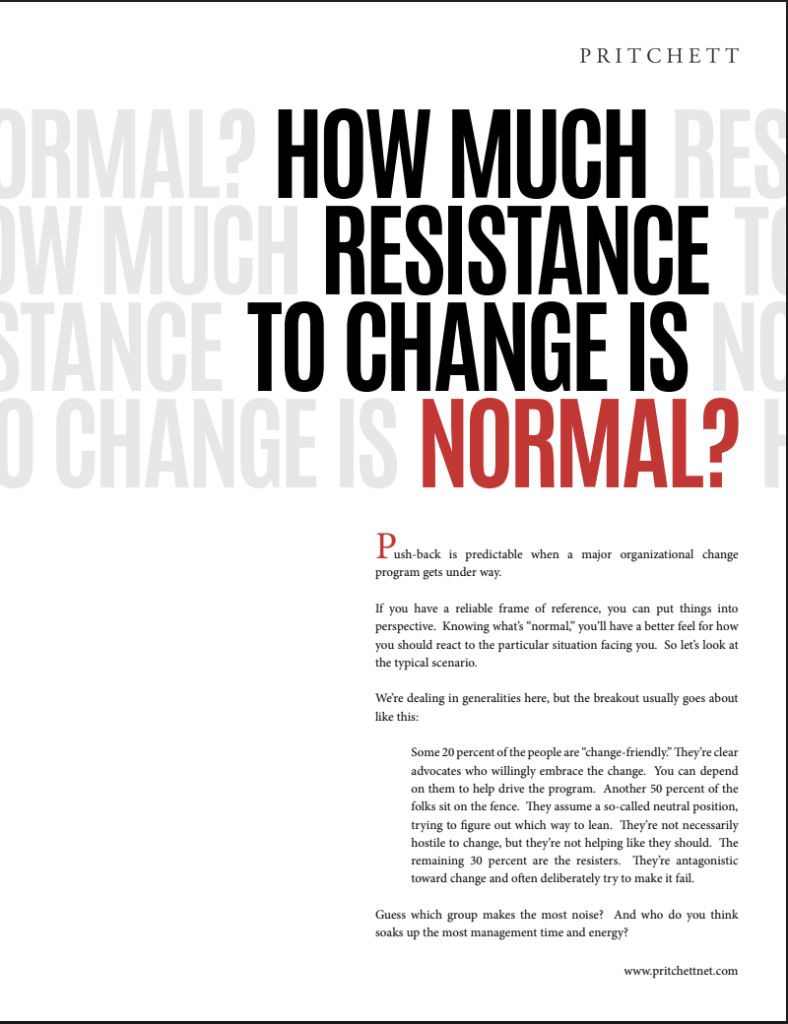
Download File:
Resistance to change is one of the most common challenges leaders face. When a new strategy, structure, process, system, or culture shift is introduced, some level of resistance should be expected.
Employees may resist because they are uncertain, overwhelmed, unconvinced, tired from previous changes, or concerned about how the change will affect their role. Some may worry about losing competence, influence, comfort, or stability. Others may simply need more information before they can support the new direction.
The problem arises when leaders treat all resistance as negativity or disobedience. Resistance can sometimes provide useful information. It may reveal communication gaps, practical issues, emotional concerns, or areas where the change plan needs more support.
This Pritchett insight helps leaders develop a more balanced understanding of resistance. Instead of asking why people are resisting, leaders can begin asking what the resistance is trying to tell them and how it should be managed constructively.
This resource is helpful for CEOs, HR leaders, managers, change teams, and consultants who want to improve change adoption without ignoring the human response to uncertainty.
What You’ll Learn From This PDF:
Resistance to change is not always a sign that something is wrong. Sometimes, it is a signal that leaders need to listen more carefully.
Download this Pritchett insight to understand what resistance may reveal — and how leaders can respond more constructively during change.