
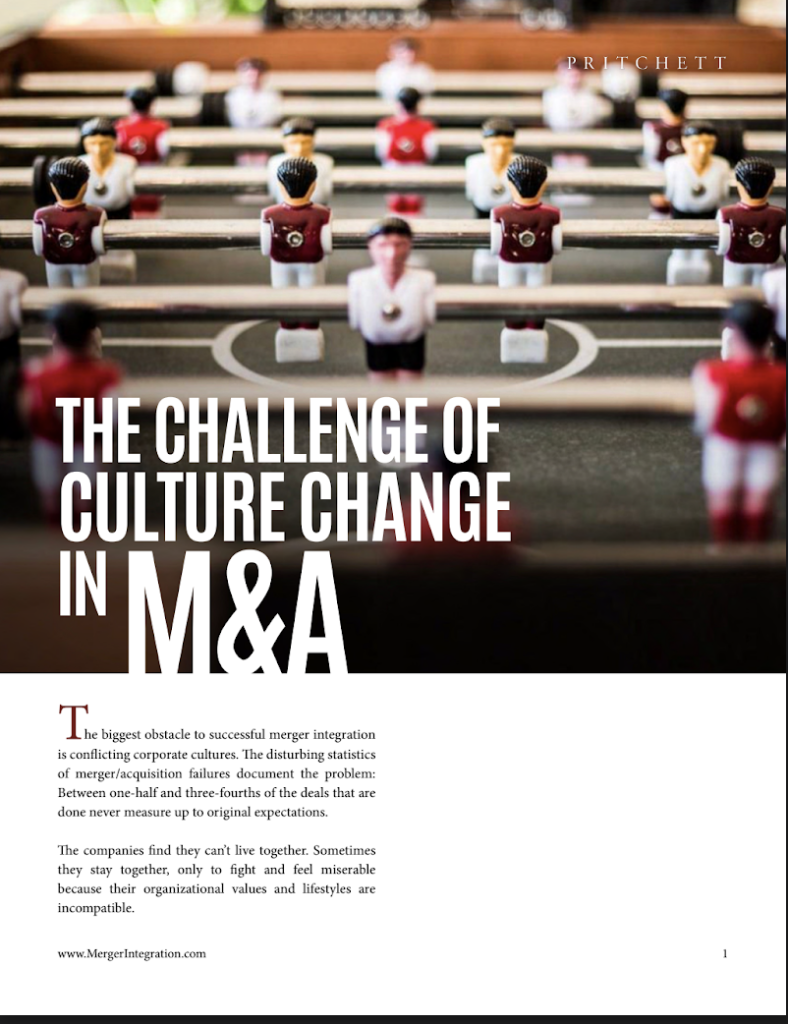
Download File:
In mergers and acquisitions, culture is often one of the most difficult areas to manage. Financial terms may be agreed, legal documents may be signed, and operational plans may be prepared — but the real integration challenge begins when people from different organisational cultures must work together.
Each organisation brings its own habits, leadership style, communication norms, decision-making patterns, and expectations. Employees may compare “how we used to do things” with “how they do things.” Managers may struggle to align teams that have different assumptions about authority, accountability, speed, risk, and collaboration.
If culture is not managed deliberately, it can create friction long after the deal is completed. Misunderstandings can grow. Trust can weaken. Productivity can suffer. The intended value of the merger or acquisition may become harder to realise.
This Pritchett insight helps leaders recognise culture change as a central part of M&A integration. It encourages organisations to look beyond structure and systems and pay closer attention to the human dynamics that influence post-deal success.
This resource is valuable for CEOs, business owners, M&A integration teams, HR leaders, corporate development teams, and senior executives responsible for merger integration.
What You’ll Learn From This PDF:
M&A integration often fails not because the numbers are wrong, but because the cultures do not come together effectively.
Download this Pritchett insight to explore why culture change is one of the most difficult parts of merger integration — and why leaders must manage it deliberately.