
Download Link:
When an organisation introduces a new process, the focus usually goes to the visible parts of change — the workflow, the forms, the system, the approval steps, the software, or the new operating procedure. These are important, but they are only one part of successful process improvement.
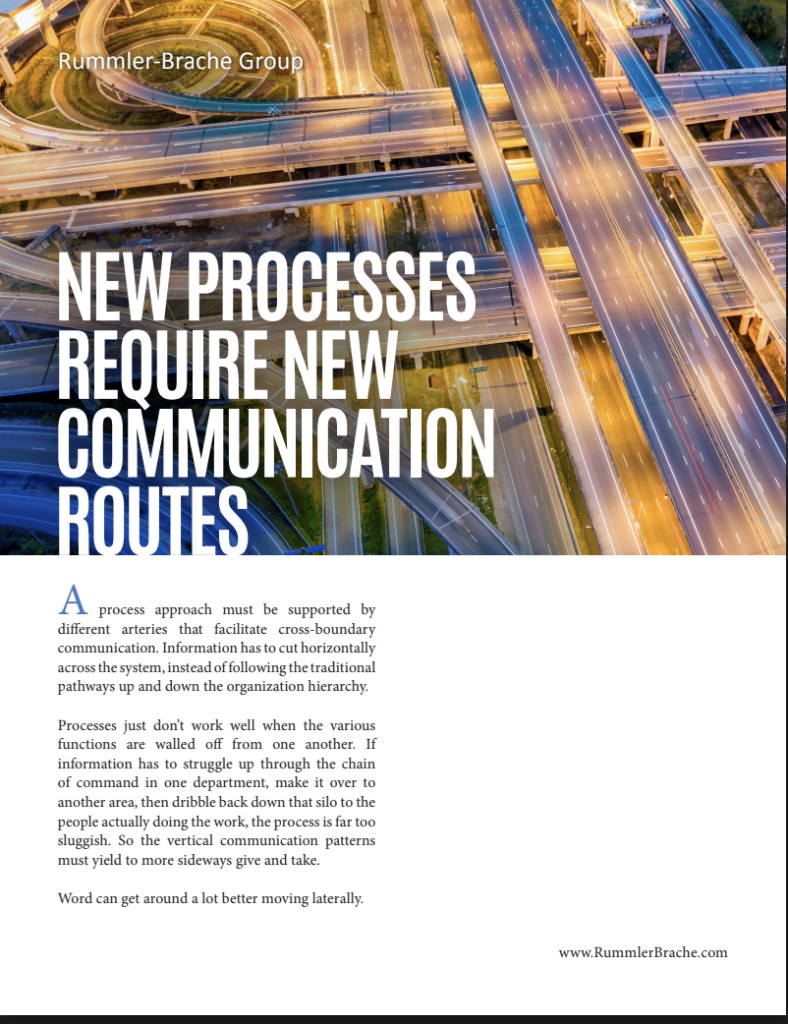
A new process also changes how people need to communicate. Information may need to move faster. Decisions may need to involve different people. Teams that used to work separately may now need to coordinate more closely. Managers may need new reporting rhythms, and employees may need clearer guidance on where to raise issues, who to ask, and how to escalate problems.
Without new communication routes, even a well-designed process can break down. Employees may continue using old habits, outdated channels, informal shortcuts, or assumptions from the previous way of working. This can create confusion, delays, duplicate work, resistance, and frustration across the organisation.
This Pritchett insight helps leaders recognise that process change is not just a technical redesign exercise. It is also a communication challenge. For a new process to work, people must understand not only what has changed, but also how information should flow in the new environment.
This resource is especially useful for leaders, department heads, transformation teams, HR professionals, and operations managers who are introducing new processes and want to improve adoption across the business.
What You’ll Learn From This PDF:
A new process will only work when people know how to communicate within it.
Download this Pritchett insight to explore why communication routes must evolve alongside process change — and why leaders should not assume that a new workflow will automatically create new behaviours.