
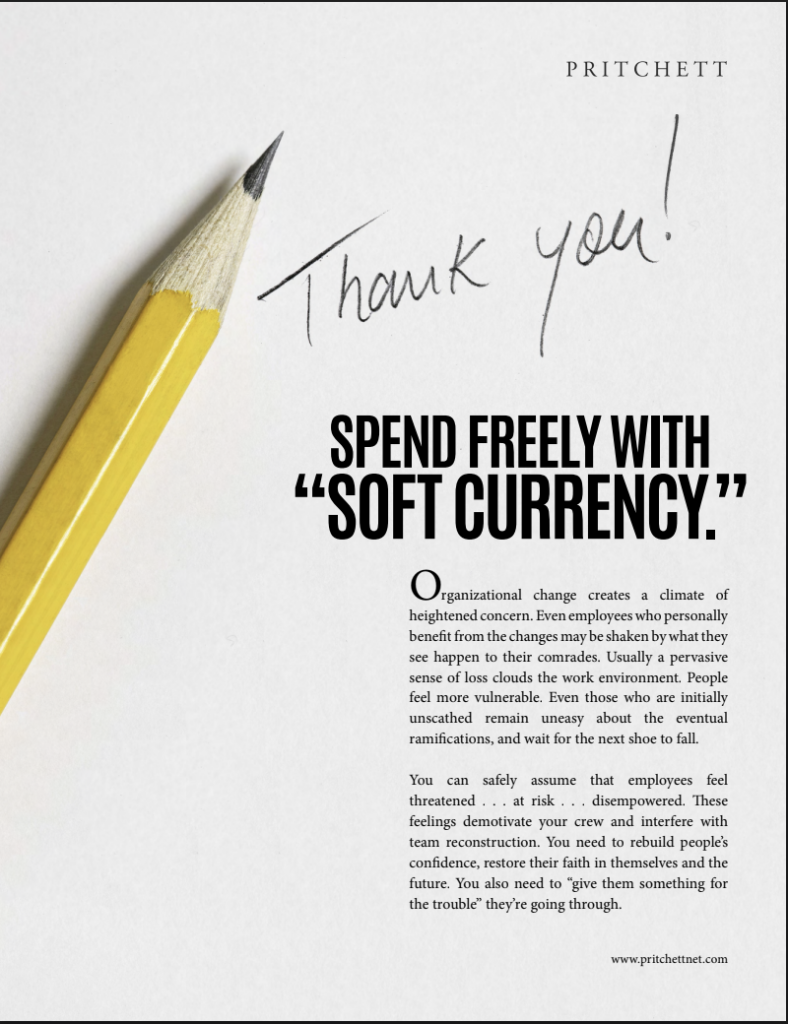
Download File:
In business, leaders often focus on financial capital, operational resources, technology, and talent. But during periods of change, another form of currency becomes extremely important: trust.
This “soft currency” may include credibility, goodwill, respect, confidence, emotional commitment, and the strength of relationships within the organisation. It may not appear on the balance sheet, but it strongly affects how people respond to leadership decisions.
When leaders have built soft currency, employees are more likely to listen, cooperate, give the benefit of the doubt, and stay engaged through uncertainty. When that currency is low, even reasonable decisions may be met with suspicion, resistance, or disengagement.
This Pritchett insight encourages leaders to think seriously about the relational capital they have built before asking people to go through difficult change. It reminds organisations that trust is not a soft issue — it is a practical leadership asset.
This resource is valuable for leaders, HR professionals, culture teams, transformation teams, and managers responsible for guiding people through change.
What You’ll Learn From This PDF:
Trust, credibility, goodwill, and respect are not soft extras. During change, they can become some of the most important leadership assets.
Download this insight to explore how “soft currency” helps leaders guide people through uncertainty with greater confidence and cooperation.